
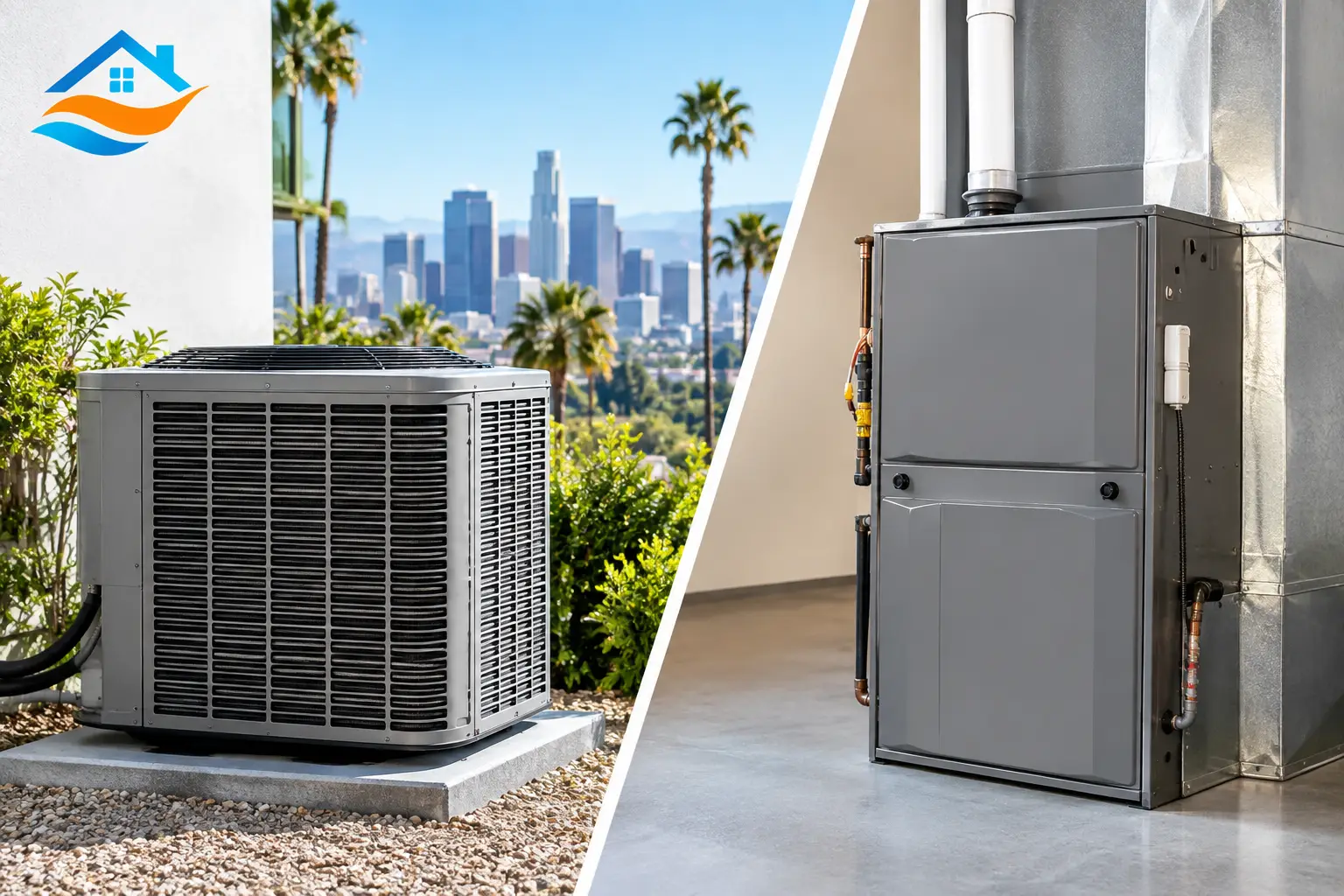
A Los Angeles winter may not bring deep freezes, but cool nights can still expose a heating system that is noisy, uneven, expensive to run, or simply past its useful life. When it is time to replace aging equipment, the question is often heat pump or furnace. The right answer depends on more than the unit itself. Your home’s electrical capacity, existing ductwork, insulation, cooling needs, and long-term plans all matter.
For many local homeowners, a heat pump is an excellent fit because it provides both heating and air conditioning in one system. A furnace remains a practical choice in the right circumstances, especially when a home has reliable gas service, a newer air conditioner, or specific installation constraints. A careful evaluation helps prevent spending money on equipment that does not match the house.
Heat Pump or Furnace: The Core Difference
A gas furnace creates heat by burning natural gas and moves that heat through the home using a blower and ductwork. It is a heating-only appliance, so most homes with furnaces also have a separate central air-conditioning system for summer cooling.
A heat pump does not generate heat through combustion. Instead, it transfers heat. During heating season, it draws available heat from outdoor air and brings it indoors. In cooling season, it reverses direction and removes heat from the home, working much like a central air conditioner. Southern California’s generally mild winter temperatures make this process particularly efficient for many households.
That difference affects the entire project. Replacing a furnace may be a straightforward heating upgrade. Installing a heat pump can be a broader HVAC decision because it may replace both the furnace and air conditioner while changing the home’s energy use from gas to electricity.
Why Heat Pumps Work Well in Los Angeles County
Heat pumps are increasingly popular in Los Angeles County for a simple reason: they are designed to perform efficiently in moderate climates. When outdoor temperatures are cool rather than severely cold, a modern heat pump can maintain comfortable indoor temperatures without the high energy demand seen in harsher winter regions.
The biggest advantage is year-round comfort from one matched system. Rather than maintaining a separate furnace and air conditioner, homeowners can use one outdoor heat pump and one indoor air handler or compatible furnace. This can simplify future service planning and provide consistent heating and cooling performance.
A heat pump can also support a home’s move toward electrification. That may be especially appealing during a major remodel, ADU project, panel upgrade, or whole-home renovation. When walls, ceilings, and electrical systems are already being opened and updated, it is often the right time to assess ducts, ventilation, insulation, and HVAC equipment together.
Still, a heat pump is not automatically the best choice for every property. Older homes may need electrical upgrades before adding an all-electric system. Poorly sealed ducts, undersized returns, or inadequate insulation can limit comfort regardless of how efficient the new equipment is. The installation must be designed around the home, not just the equipment brochure.
When a Furnace Is Still the Right Choice
A high-efficiency gas furnace can remain a dependable option for Los Angeles homeowners. If your existing central air conditioner is relatively new and performing well, replacing only an aging furnace may be more sensible than replacing the entire HVAC system. This approach can reduce the immediate project cost while preserving equipment that still has useful life.
Furnaces also deliver strong, fast heat and are familiar to homeowners with established gas service. For some households, keeping a gas furnace fits their current utility setup and avoids the added scope of electrical modifications.
The trade-off is that the home will still depend on separate equipment for heating and cooling. If the air conditioner is approaching the end of its service life, replacing only the furnace can create a mismatched system later. Efficiency ratings, blower performance, refrigerant compatibility, and warranty terms are often best when heating and cooling components are selected as a coordinated system.
A furnace installation also deserves close attention to safety and workmanship. Proper venting, gas connections, combustion air, drainage, airflow, and commissioning are essential. A furnace that is oversized, improperly vented, or poorly connected to existing ducts can create comfort problems and unnecessary energy waste.
Compare Operating Costs the Right Way
Homeowners often ask which option costs less to operate. The honest answer is that utility costs vary by home and by how the equipment is used. Electricity rates, natural gas rates, thermostat settings, insulation levels, solar production, duct leakage, and equipment efficiency all influence the monthly bill.
A heat pump can be highly efficient because it moves heat rather than creating it. Its heating efficiency is commonly measured by HSPF2, while cooling efficiency is measured by SEER2. Higher ratings can reduce energy use, but the highest-rated model is not always the best value if the added cost will not be recovered through your actual usage.
Furnace efficiency is measured by AFUE, which indicates how much fuel becomes usable heat. A high-efficiency furnace may offer lower operating costs than an older unit, especially if it replaces equipment with poor combustion performance or airflow issues.
The most useful comparison looks beyond a single utility bill. Consider the total cost of ownership: purchase and installation, electrical or gas work, expected maintenance, projected energy use, remaining life of existing air-conditioning equipment, and whether the project supports future home improvements. A licensed contractor should explain those trade-offs clearly rather than steering every homeowner toward one answer.
Ductwork and Airflow Matter More Than Many Homeowners Expect
Heating and cooling equipment can only perform as well as the air distribution system allows. In older Los Angeles homes, ducts may be undersized, disconnected, poorly insulated, damaged, or leaking into attics and crawlspaces. Rooms that are too hot in summer or too cold in winter are often airflow problems, not simply equipment problems.
Before selecting a heat pump or furnace, the contractor should evaluate the home’s heating and cooling load, duct condition, return-air pathways, filter access, thermostat location, and ventilation needs. Equipment should be sized through proper calculations, not by copying the capacity of the old unit. An oversized system may cycle on and off too frequently, create uneven temperatures, and struggle with humidity control during cooling season.
Some homes are better candidates for ductless mini-splits or a combination of ducted and ductless equipment. A room addition, converted garage, ADU, or hard-to-condition upstairs space may benefit from a separate zone instead of forcing an older central system to do work it was never designed to handle.
Installation Scope Can Change the Best Choice
The equipment decision should be coordinated with the condition of the property. A homeowner planning a kitchen remodel, addition, or ADU may have an opportunity to improve electrical service, relocate equipment, replace ducts, and create better access for future maintenance. Solving those items during construction is usually cleaner and more efficient than reopening finished areas later.
At Alfa Home Services, HVAC work can be coordinated with plumbing and general construction scopes when a project requires more than a simple equipment replacement. That means homeowners can address system access, framing modifications, condensate drainage, electrical needs, ventilation, and finished-space protection with one accountable contractor.
For a straightforward replacement, the same standards still apply. The work area should be protected, the installation should be clean, permits should be handled when required, and the system should be tested before the job is complete. Proper commissioning includes checking refrigerant performance, airflow, thermostat operation, safety controls, drainage, and temperature output.
Questions to Ask Before You Decide
Start with the condition of your current equipment. If both the furnace and air conditioner are aging, a heat pump replacement may offer a strong long-term path. If only the furnace has failed and the air conditioner is newer, a furnace replacement may be the more practical immediate decision.
Then consider your electrical panel, gas service, solar plans, and future renovation goals. Ask whether the proposed system is correctly sized for the house, whether ducts need repairs or replacement, and what work is included in the estimate. A clear proposal should identify equipment, labor, permits, required modifications, warranty information, and any recommended work that is optional rather than essential.
The best heating choice is the one that delivers dependable comfort without creating avoidable problems elsewhere in the home. A thoughtful in-home assessment can turn a confusing heat pump or furnace decision into a clear plan that fits your property, budget, and the way your family lives.