
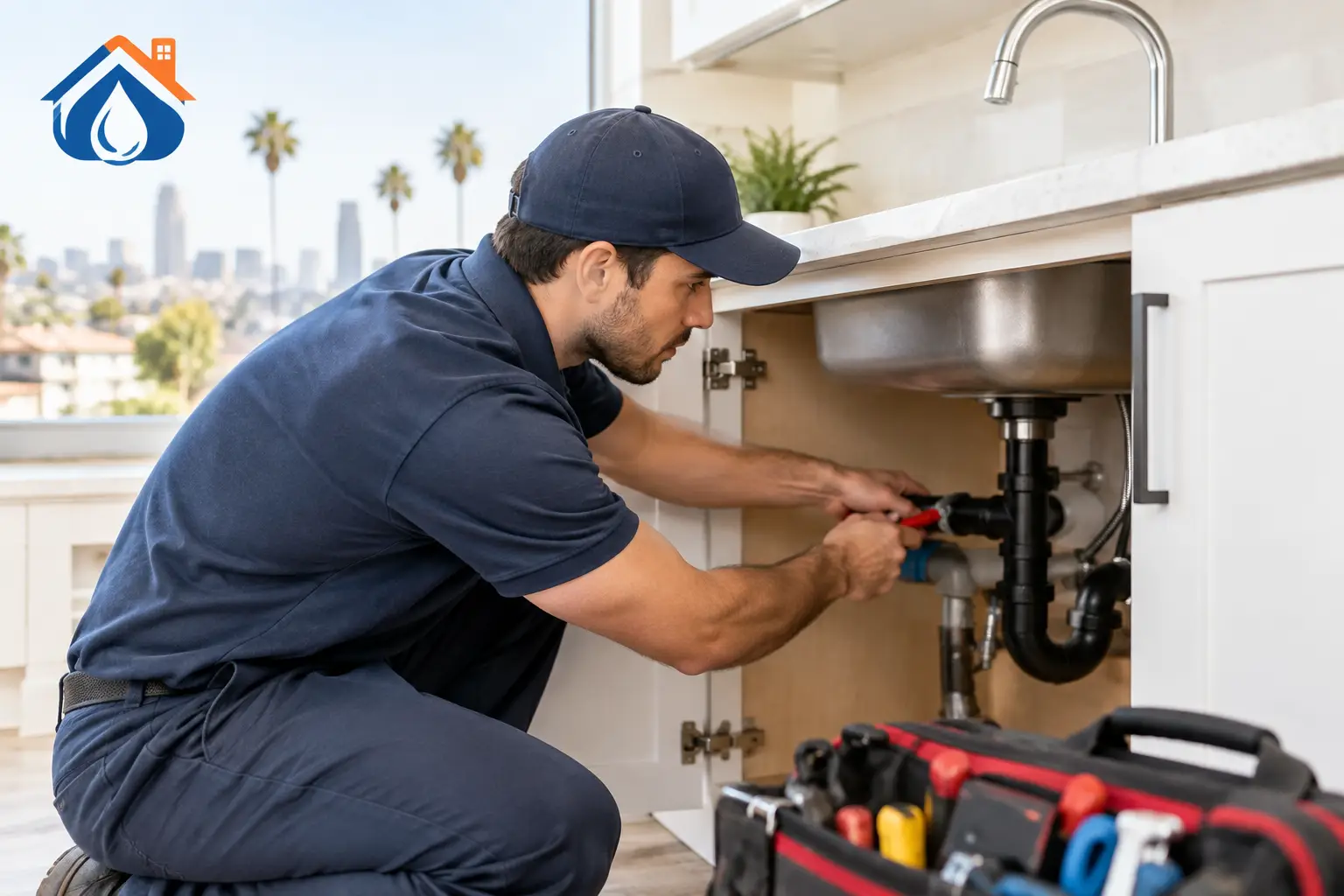
A small puddle under a sink can be the first sign of a repair that grows quickly behind a cabinet, inside a wall, or beneath a slab. For Los Angeles County homeowners, a practical home plumbing maintenance guide is less about taking on complicated repairs and more about noticing changes early, protecting the home’s water systems, and knowing when to bring in a licensed plumber.
Older galvanized pipes, hard-water mineral buildup, earthquake movement, and long periods of dry weather can all affect local homes differently. A few consistent checks can help reduce water waste, prevent avoidable damage, and make major plumbing decisions less urgent.
Start With the Water You Can See
Walk through the home once a month and look at the fixtures you use every day. Check beneath kitchen and bathroom sinks, around toilet bases, behind washing machines, and near the water heater. You are looking for moisture, corrosion, staining, warped cabinet material, or a musty smell.
A leak does not always produce a visible drip. Slow leaks may leave mineral deposits around supply valves or cause flooring to feel soft near a fixture. If you find moisture, dry the area, identify where it is coming from if possible, and avoid assuming the problem will resolve on its own. Tightening a loose connection may help in some cases, but cracked fittings, deteriorated shutoff valves, and worn supply lines need proper repair.
Toilets deserve special attention because they can waste a surprising amount of water without obvious signs. If a toilet refills briefly when no one has flushed it, or if you hear water moving intermittently, the flapper or fill valve may be failing. Food coloring in the tank can reveal a silent leak: if color appears in the bowl without flushing after 15 to 20 minutes, the toilet needs service.
Know Where Your Main Shutoff Valve Is
Every household should know how to turn off its water supply before an emergency occurs. The main shutoff is often near the water meter, at the front of the property, in a garage, or where the water service enters the home. Its location varies, especially in older Los Angeles homes and properties that have been remodeled over the years.
Test the valve carefully once or twice a year. A valve that has not moved for years can seize when you need it most. If it is difficult to operate, do not force it hard enough to damage the connection. Have it evaluated and replaced if necessary.
Also identify the smaller shutoff valves beneath sinks, behind toilets, and at appliances. These local valves allow a plumber to isolate one fixture without shutting water off to the entire home. If a valve is corroded, leaking, or difficult to turn, replacing it is usually a sensible preventive repair.
Protect Drains Without Damaging Pipes
A slow drain is a warning, not an inconvenience to ignore. Hair, soap residue, grease, food particles, and mineral scale gradually narrow drain lines. Waiting until a complete backup happens can turn a simple service call into a cleanup and repair project.
In bathrooms, use hair catchers and clean them regularly. In the kitchen, keep grease, cooking oil, coffee grounds, rice, pasta, and fibrous vegetable scraps out of the drain. Even if a garbage disposal is installed, it is not designed to process every type of food waste.
Avoid relying on harsh chemical drain cleaners. These products can be dangerous to handle, may not clear the actual blockage, and can be especially hard on older pipes or already weakened fittings. A plunger or a small hand auger may be appropriate for a minor, accessible clog. Repeated slow drains, gurgling sounds, sewage odors, or water backing up in a tub when another fixture drains point to a larger issue that needs professional diagnosis.
Pay Attention to Sewer-Line Warning Signs
A sewer problem often affects more than one fixture. If flushing a toilet causes water to rise in a shower, or several drains are slow at the same time, the issue may be in a shared drain or the main sewer line. Tree roots, pipe offsets, scale buildup, and aging pipe materials are common concerns in established neighborhoods.
Do not continue running water to test a suspected sewer backup. Limiting water use can prevent wastewater from entering living areas. A camera inspection can show what is happening inside the line and helps avoid guessing about whether cleaning, repair, or replacement is the appropriate next step.
Give Your Water Heater Regular Attention
Your water heater works year-round, yet it is often overlooked until there is no hot water or a leak appears. Check the area around the unit monthly for rust, dampness, or unusual sounds. Popping or rumbling can indicate sediment accumulation, particularly in areas with mineral-heavy water.
Confirm that the temperature setting is not unnecessarily high. For most households, a setting around 120 degrees Fahrenheit provides comfortable hot water while helping reduce scalding risk and energy use. Household needs vary, however, and homes with certain dishwashers or specific health considerations may need professional guidance before changing settings.
If you have a tank-style water heater, periodic flushing can reduce sediment, but the right approach depends on the unit’s age, condition, and maintenance history. Flushing a neglected older tank can sometimes expose an existing problem. Check the manufacturer’s instructions and consult a licensed plumber if the unit is aging, making noise, or showing signs of corrosion.
In California, proper water-heater seismic strapping is also essential. The unit should be secured correctly to help prevent movement during an earthquake. If straps are loose, missing, or improperly installed, schedule an inspection rather than treating them as a cosmetic detail.
Watch Your Water Bill and Water Pressure
Your water bill can reveal a hidden leak before you see any damage. Compare usage from month to month, allowing for changes in irrigation, guests, or seasonal needs. A sudden increase with no clear explanation is worth investigating.
For a basic leak check, turn off water use inside and outside the home, then watch the water meter. If the leak indicator moves or the meter reading changes over a short period, water may be escaping somewhere on the property. Underground lines and slab leaks require professional leak detection, since the source may not be visible.
Water pressure also matters. Pressure that is too high can shorten the life of supply lines, faucets, valves, and appliances. Low pressure can result from a clogged aerator or localized fixture issue, but it may also indicate pipe corrosion, a leak, or a failing pressure regulator. The pattern matters: one weak faucet is different from weak flow throughout the house.
Maintain Outdoor Plumbing and Irrigation Connections
Outdoor hose bibs, irrigation valves, and exposed pipe connections are easy to overlook. Check them for leaks, damaged handles, and dripping after use. A hose left under constant pressure can fail unexpectedly, so shut off the hose bib when practical and disconnect hoses that are no longer needed.
Irrigation systems should be checked for overspray, broken sprinkler heads, soggy areas, and unexplained runoff. These issues can waste water and may direct moisture toward foundations, walkways, or exterior walls. For homes with landscaping near the sewer line, root management is also worth discussing during drain and sewer maintenance.
Plan Ahead for Aging Pipes and Remodels
A single repaired leak does not automatically mean a whole-home repipe is needed. However, frequent leaks, rusty or discolored water, recurring low pressure, exposed galvanized piping, or extensive corrosion may indicate that a larger plan is more cost-effective than repeated spot repairs.
This is especially relevant before a kitchen remodel, bathroom renovation, ADU project, or room addition. Opening walls and floors creates an opportunity to assess old supply and drain lines while access is available. Coordinating plumbing work with construction can reduce disruption and help ensure the finished space performs as well as it looks.
A licensed contractor can explain the condition of the plumbing, define the scope clearly, and help you distinguish between an immediate repair and a long-term upgrade. Alfa Home Services approaches this work with the same standard we bring to every home: clear communication, clean job sites, and workmanship that respects your property.
A Simple Seasonal Plumbing Routine
Spring and fall are useful times to inspect visible plumbing, test shutoff valves, check under sinks, and look over outdoor connections. Once a year, review your water heater’s condition, evaluate unusual water-bill changes, and address drains that have become consistently slow.
The goal is not to turn every homeowner into a plumber. It is to catch small changes while they are still manageable. When a concern is unclear, a careful professional inspection can provide the confidence to act early and protect the home you have worked hard to maintain.