
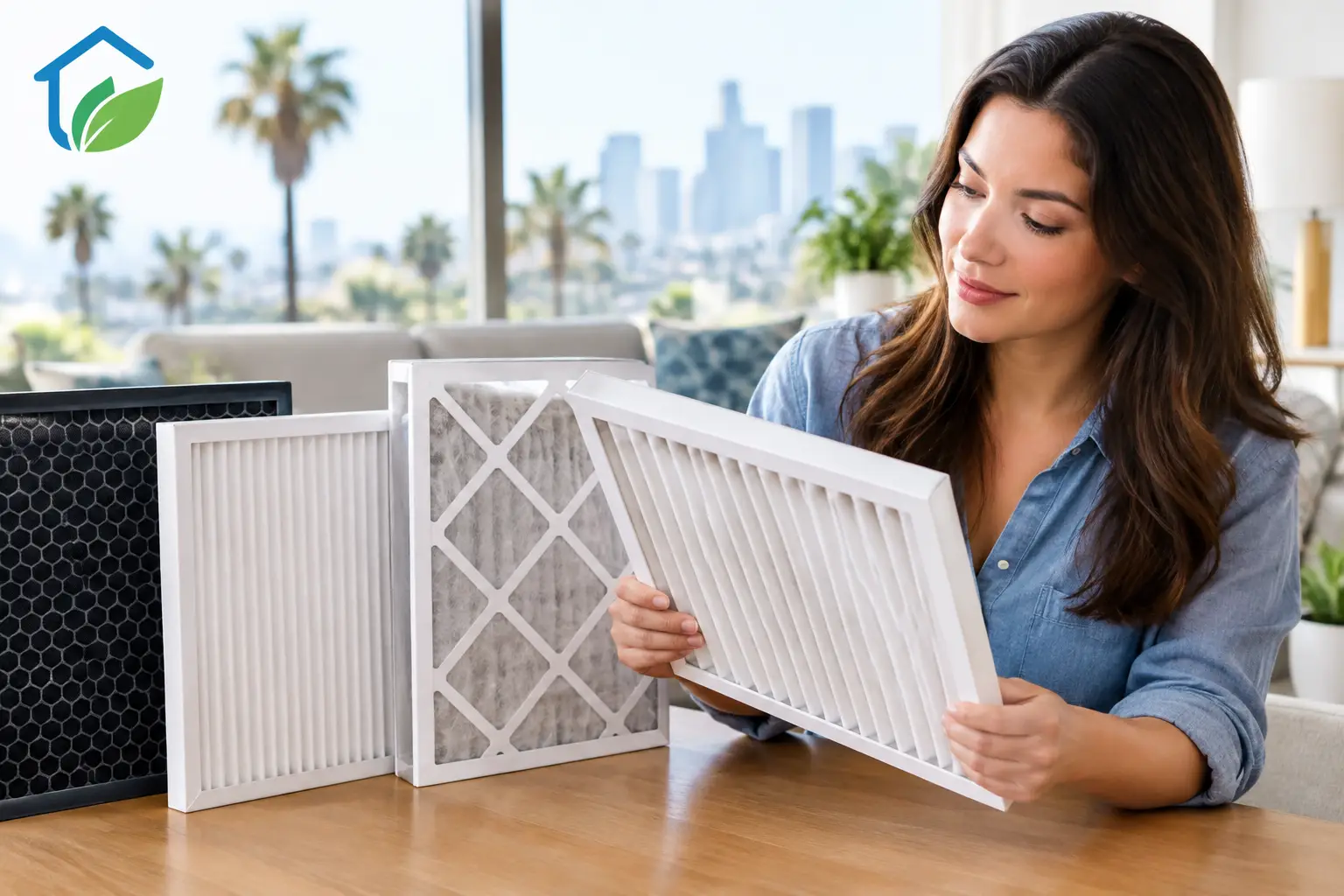
A filter that looks clean can still be restricting your HVAC system, while a filter with an impressive rating can create problems if your equipment was not designed for it. To choose home air filters well, Los Angeles homeowners need to balance cleaner indoor air with the airflow their furnace, air conditioner, or heat pump requires.
That balance matters in a region where dust, construction activity, pollen, pet dander, and occasional wildfire smoke can all find their way indoors. The right filter supports comfort and helps protect the equipment you rely on. The wrong one may lead to weak airflow, higher energy use, frozen AC coils, or unnecessary strain on the blower motor.
Start With the Exact Filter Size
Before comparing filtration ratings, confirm the size your system actually needs. Look at the frame of the existing filter or check the filter compartment near the indoor air handler, furnace, or return grille. Common labeled sizes include 16x20x1, 20x20x1, and 16x25x1.
The measurement printed on a filter is often its nominal size, not its precise physical size. For example, a filter labeled 16x25x1 may measure slightly under those dimensions. That difference is normal, but it means a replacement should match the size specified by the equipment or existing filter frame. A filter that is too small can allow unfiltered air to bypass it. One that is too large may bend, leave gaps, or not fit at all.
Some homes have a single central return filter, while others have filters behind multiple return grilles. Larger homes, additions, and homes with separate HVAC zones may have more than one filter location. Replace every filter your system uses, not only the most visible one.
Check the Direction of Airflow
Every disposable filter has an arrow on its frame. The arrow must point in the direction air travels through the system - usually toward the furnace, air handler, or return duct. At a wall or ceiling return grille, air moves from the room into the ductwork, so the arrow points away from the living space.
Installing a filter backward will not usually cause immediate damage, but it can reduce its effectiveness and may affect how the filter media performs. Take a quick photo before removing the old filter if the airflow direction is unclear.
Choose Home Air Filters by MERV Rating
MERV stands for Minimum Efficiency Reporting Value. It indicates how effectively a filter captures airborne particles. A higher MERV rating captures smaller particles, but it can also create more resistance to airflow. Higher is not automatically better.
For many well-maintained residential systems, a MERV 8 filter is a practical everyday choice. It captures much of the household dust, pollen, lint, and larger pet dander that would otherwise circulate through the HVAC system. It is often a sensible starting point for homes without significant allergy or air-quality concerns.
MERV 11 filters provide finer filtration and can be a good option for households with pets, allergy concerns, or more dust exposure. They capture smaller particles than standard filters while remaining suitable for many residential systems.
MERV 13 filters can capture a higher percentage of fine particles, including some smoke-related particles. During periods of poor outdoor air quality, that added filtration can be valuable. However, not every older furnace, air handler, duct system, or return grille can handle a MERV 13 filter without a meaningful drop in airflow.
A restrictive filter can make a system work harder. In cooling mode, insufficient airflow can contribute to a frozen evaporator coil. In heating mode, it can cause elevated operating temperatures and system shutdowns. If you want to move from MERV 8 to MERV 11 or 13, particularly in an older Los Angeles home, it is wise to confirm that your HVAC system has adequate return-air capacity.
Do Not Force a HEPA Filter Into a Standard Slot
True HEPA filters are highly effective, but most standard residential HVAC systems are not designed to pull air through them in a typical one-inch filter slot. The pressure drop can be too high for the blower and ductwork.
If your household needs more advanced particle control, the solution may be a professionally designed media cabinet, upgraded return ductwork, a dedicated air-cleaning system, or portable room air cleaners in the rooms where people sleep and spend the most time. Filtration works best when it is matched to the system rather than added as an afterthought.
Match the Filter to Your Household Needs
Your household and home conditions should guide the rating you select. A quiet household with no pets may be well served by MERV 8. A family with a shedding dog, frequent open windows, nearby construction dust, or seasonal allergies may benefit from MERV 11 if the system supports it.
Wildfire smoke requires a more careful approach. A better filter can help reduce particles that enter a home, but it cannot solve every smoke issue by itself. Keep windows and exterior doors closed when outdoor air quality is poor, make sure ductwork and return grilles are properly sealed, and avoid operating exhaust fans more than necessary if they are pulling smoky outdoor air through gaps in the home.
If someone in the home has asthma, severe allergies, or respiratory sensitivity, speak with an HVAC professional and their health care provider about the right strategy. The answer may involve filtration, humidity control, duct sealing, equipment maintenance, and room-specific air cleaning - not simply the highest-rated filter available.
Consider Filter Thickness and Surface Area
One-inch filters are common and convenient, but they have limited surface area. They can load with dust fairly quickly, especially in homes with pets or high indoor traffic. A thicker four-inch or five-inch media filter has more surface area and may last longer while creating less airflow resistance than a highly restrictive one-inch filter.
That does not mean every home can simply use a thicker filter. The system needs a compatible filter cabinet with the correct dimensions. When replacing an aging furnace or air handler, this is worth discussing during the design process. A properly sized media cabinet can improve filtration without asking too much of the blower.
Replace Filters on a Realistic Schedule
The calendar on the package is only a guideline. A one-inch filter often needs replacement every 30 to 90 days, depending on its MERV rating and home conditions. Homes with pets, active renovations, frequent open windows, or heavy dust may need more frequent changes. Thicker media filters may last six months or longer, but they should still be inspected regularly.
Check the filter monthly during the first few months after moving into a home or changing filter types. Hold it up to a light source. If little light passes through, or the surface is visibly covered with dust and debris, replace it. You may also notice reduced airflow at supply vents, more dust around the house, or longer cooling and heating cycles.
Do not wait until a filter is completely gray and packed with debris. By then, the system may already be struggling to move air. Setting a reminder on your phone or writing the installation date on the filter frame is a simple habit that helps prevent avoidable service issues.
Watch for Problems a New Filter Will Not Fix
Replacing a dirty filter is basic HVAC care, but it cannot correct duct leaks, undersized returns, dirty coils, failing blower components, or poor system sizing. If filters become dirty unusually fast, rooms are stuffy, or your AC repeatedly freezes, there may be a larger airflow issue to address.
Construction dust deserves special attention. During a remodel, flooring project, or drywall work, fine dust can overwhelm a filter quickly and may reach sensitive HVAC components. Protect return openings when appropriate, avoid running the system during the dustiest phases unless conditions require it, and inspect the filter more often. A clean job site protects both the home and the equipment.
For homeowners who are unsure whether a higher-MERV filter is appropriate, Alfa Home Services can assess the system, ductwork, and return-air setup as part of a practical HVAC conversation. The goal is not to sell the most expensive filter. It is to keep conditioned air moving properly while improving the air your family breathes.
A good filter choice is one you can replace on schedule, that fits without gaps, and that your HVAC system can move air through comfortably. That simple standard protects comfort, supports equipment life, and gives your home a cleaner starting point every day.