
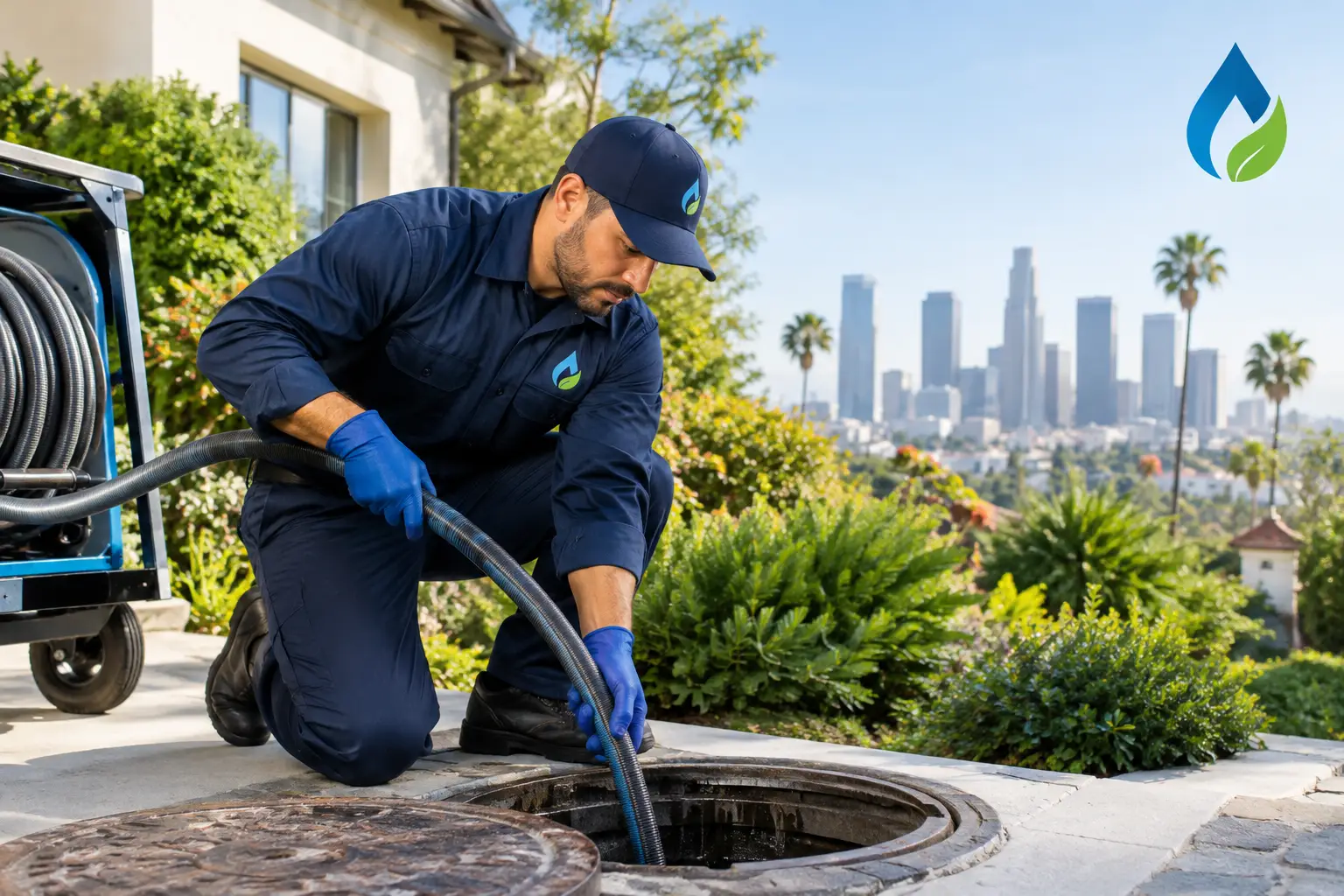
A sewer backup rarely begins with a dramatic flood. More often, it starts with a toilet that bubbles when the washer drains, a shower that empties slowly, or an odor near a floor drain. Sewer backup prevention means noticing those early signals, maintaining the line before it fails, and making informed decisions about repairs that protect your home, family, and property.
For Los Angeles County homeowners, this work matters especially in older neighborhoods. Many homes still have aging clay, cast-iron, or Orangeburg sewer components, while mature trees, remodeling projects, and busy household plumbing put added pressure on the system. A little planning can prevent a disruptive, unsanitary, and expensive emergency.
Know Where a Backup Can Start
Your home has two different drainage areas that are easy to confuse. The smaller branch drains carry water from sinks, tubs, toilets, and appliances to the main sewer line. The main line then carries wastewater from the house to the public sewer connection or, in some properties, a septic system.
A clog in one sink usually points to that fixture's drain. When several drains slow down at once, or water rises in a shower or tub when a toilet flushes, the main sewer line deserves immediate attention. The lowest plumbing fixture in the home is often where sewage appears first. In a single-story house, that may be a shower, tub, or floor drain. In a home with a lower-level bathroom or ADU, those fixtures may be most vulnerable.
Not every backup is caused by a homeowner's private line. Heavy rain, a blockage in a municipal sewer, or capacity issues farther down the system can also force wastewater back toward a property. The practical response is still the same: stop adding water to the drains, protect people and belongings from contamination, and have the line assessed so the source can be identified.
Everyday Sewer Backup Prevention Habits
The most reliable habits are simple, but they work only when everyone in the household follows them. Toilets are designed for human waste and toilet paper. Products marketed as "flushable" can still collect in bends, snag on roots, or contribute to a blockage farther down the line. Paper towels, wipes, cotton products, dental floss, and hygiene products belong in the trash.
Kitchen drains need the same discipline. Grease may look liquid when it goes into the sink, but it cools and sticks to pipe walls. Over time, it traps food particles and turns a clear pipe into a narrow passage. Let cooking fats cool in a container, then dispose of them in the trash. A garbage disposal can handle small food scraps, but it is not a solution for oils, fibrous vegetables, coffee grounds, or large amounts of food waste.
Be careful with chemical drain cleaners. They may provide a short-lived improvement in a localized clog, but harsh chemicals can damage older piping, create unsafe conditions for the person making repairs, and do nothing for a root-filled main line. If a drain repeatedly clogs, the right answer is diagnosis, not stronger chemicals.
Watch for the Warning Signs
A sewer line usually gives homeowners opportunities to act before a complete backup. Call for professional drain and sewer service if you notice recurring clogs, multiple slow drains, gurgling fixtures, sewage odors, or water appearing in a tub or shower when another fixture runs.
Pay particular attention after laundry day. Washing machines discharge a high volume of water quickly, so they often expose a partial main-line blockage. If the toilet gurgles or a nearby shower drain fills while the machine is draining, stop the cycle if possible and avoid running more water until the issue is checked.
Outside, unusually green or wet patches of landscaping, sinkholes near the sewer route, or a persistent odor can indicate a damaged underground pipe. These signs do not confirm the problem on their own, but they are worth investigating before a small defect becomes a major excavation.
Schedule Inspection Based on Your Home's Risk
There is no single cleaning schedule that fits every property. A newer home with properly sloped plastic piping and no nearby trees may need little more than attention to warning signs. An older Los Angeles home with large ficus, pine, or other mature trees near the sewer route may benefit from periodic preventive service.
A camera inspection provides valuable information because it shows the inside condition of the line. A qualified plumber can identify root intrusion, offset joints, cracks, standing water caused by poor slope, grease buildup, or pipe materials nearing the end of their service life. Camera work also helps distinguish a simple blockage from a structural pipe problem, which prevents homeowners from paying repeatedly for cleaning when replacement is the more responsible long-term choice.
Hydro jetting can be effective for removing heavy buildup and cutting through certain root intrusions, but it is not appropriate for every pipe. Older, damaged, or fragile lines may need a careful evaluation first. Mechanical cable cleaning can also be useful, especially for clearing an active blockage, though it may not clean pipe walls as thoroughly as jetting. The best method depends on the pipe's material, condition, and the cause of the restriction.
Protect the Line From Roots and Damage
Tree roots are one of the most common causes of main sewer trouble in established Southern California neighborhoods. Roots naturally seek moisture and can enter through tiny openings at old pipe joints. Once inside, they expand and catch paper and debris until flow becomes restricted.
Removing a tree is not always necessary or even desirable. A camera inspection can show whether roots are entering the line and where. In some cases, regular maintenance is reasonable. In others, replacing the damaged section or rehabilitating the line may offer better value than repeated cleanings. The decision should account for the pipe's overall condition, the tree's location, the expected length of ownership, and the possibility of future landscaping or renovation work.
Before planting, ask where the sewer line runs. Large trees should be kept well away from it whenever possible. If you are adding hardscape, an ADU, a room addition, or a new bathroom, make sure the project planning accounts for existing sewer access and line capacity. Construction that blocks a cleanout or places heavy loads over a compromised line can make future service more difficult and costly.
Consider a Backwater Valve Where It Makes Sense
A backwater valve is designed to help prevent sewage from flowing backward into a building when the public sewer becomes overloaded. It can be especially useful for homes with lower-level fixtures that sit below the elevation of the street sewer.
This is not a universal retrofit. A valve must be correctly sized, installed in the right location, and maintained so it can operate when needed. It may also affect how certain plumbing fixtures are configured. A licensed plumbing professional can evaluate whether a backwater valve is appropriate for your property's layout and local code requirements.
What to Do if Sewage Appears Indoors
If sewage backs up into a tub, shower, toilet, or floor drain, stop using all water fixtures immediately. Do not flush toilets, run the dishwasher, take showers, or start laundry. Keep children and pets away from the affected area, and avoid direct contact with contaminated water.
If it is safe to do so, protect nearby belongings by moving them away from the area. Do not attempt to clear a main-line blockage with chemical cleaners. Sewage cleanup can involve contaminated materials, hidden moisture, and damage beneath flooring or behind walls, so prompt professional assessment is the safer course.
Take photos for your records once the area is safe, particularly if you may need to speak with your insurance provider. Then arrange for the sewer line to be cleared and inspected. Restoring flow is urgent, but understanding why the backup happened is what helps prevent the next one.
Make Prevention Part of Home Maintenance
Sewer backup prevention is not about treating every drain noise as a crisis. It is about responding early, using the right diagnostic tools, and addressing the actual condition of the pipe. For homeowners planning a remodel, buying an older property, or dealing with repeat drain problems, a sewer camera inspection can provide clarity before larger decisions are made.
Alfa Home Services approaches drain and sewer work with the same care used on the rest of a home: clear communication, clean job sites, and recommendations grounded in what the system needs. A well-maintained sewer line stays out of sight and out of mind, which is exactly where it belongs.