
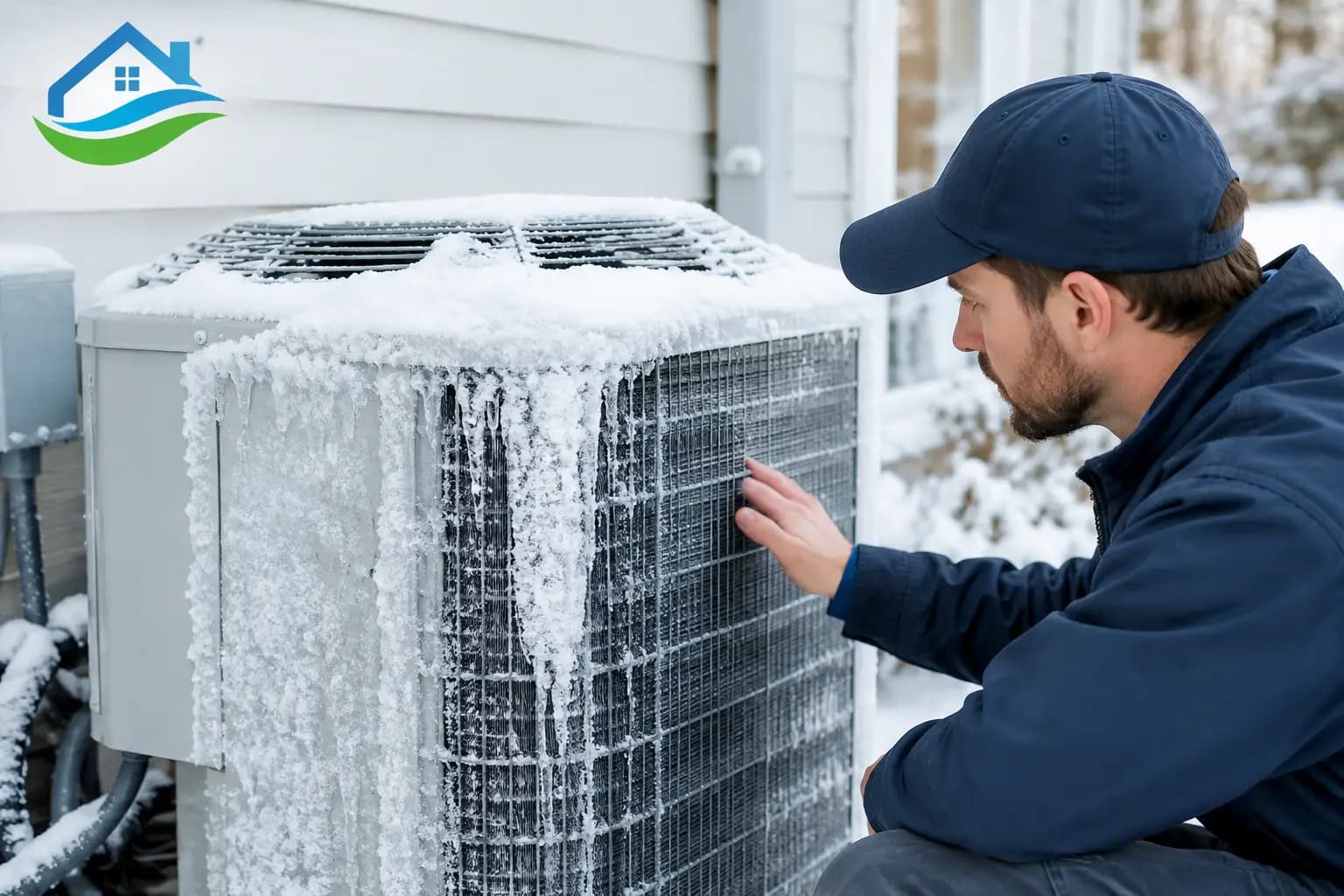
A frozen air conditioner can feel especially frustrating during a Los Angeles heat wave. If you are asking, “why does AC freeze,” the short answer is that the indoor coil has become colder than it should be. Moisture in the air then freezes on that coil, blocking airflow and leaving your home warmer, not cooler.
Ice is not the problem by itself. It is a warning that something in the cooling system needs attention. Continuing to run an iced-over unit can strain the blower, flood the drain area as ice melts, and in some cases create a costly compressor issue. A prompt, careful response helps protect both your comfort and your equipment.
Why Does AC Freeze Inside the House?
Your air conditioner cools your home by moving warm indoor air across an evaporator coil. Refrigerant inside that coil absorbs heat, while the blower sends the newly cooled air through the ducts and back into your rooms.
For this process to work properly, the system needs the right amount of airflow and the correct refrigerant pressure. When airflow drops or refrigerant pressure falls too low, the coil temperature can dip below freezing. Because Southern California homes often have enough indoor humidity for condensation to form, that moisture turns to ice on the coil.
At first, you may notice weaker airflow from the vents. As ice builds, the system may run continuously without cooling well. You might also see water near the indoor unit after the system shuts off and the ice begins to melt.
The Most Common Causes of a Frozen AC
A dirty air filter or restricted airflow
A clogged filter is one of the most common and easiest-to-address causes. The filter is meant to catch dust, pet hair, and debris before they reach the equipment. When it becomes overloaded, it restricts the air passing across the evaporator coil. Less warm air reaches the coil, so the coil gets too cold and freezes.
Closed supply vents, blocked return grilles, crushed flex duct, and furniture placed directly over vents can create similar airflow problems. In older Los Angeles homes, undersized or aging ductwork may also limit airflow, particularly after additions, remodels, or changes to a home’s layout.
A dirty indoor coil can be part of the same issue. Unlike a filter, a coil should not be cleaned casually with household products. The coil fins are delicate, and proper cleaning requires access, the right materials, and care around electrical components and condensate drainage.
Low refrigerant caused by a leak
Air conditioners do not use up refrigerant under normal operation. If refrigerant is low, the system usually has a leak that needs to be located and repaired. Low refrigerant lowers pressure in the evaporator coil, which can make it cold enough to freeze.
This problem is sometimes mistaken for a unit that simply “needs more Freon.” Adding refrigerant without finding the leak is temporary at best. It does not correct the underlying issue, and an improperly charged system can perform poorly or suffer further damage.
Signs that may point to a refrigerant concern include hissing near refrigerant lines, reduced cooling, repeated freezing, and ice on the insulated copper line outside the indoor unit. Only a qualified HVAC technician should test pressures, repair leaks, and charge a system.
A blower or electrical issue
The indoor blower is responsible for moving air across the coil. If the blower motor is failing, the capacitor is weak, the wheel is dirty, or a control problem prevents the fan from operating at the right speed, airflow can fall far below what the system needs.
This can be harder for a homeowner to identify because the thermostat may still appear normal and the outdoor unit may still be running. You may hear an unusual humming sound, notice inconsistent airflow between rooms, or find that the system cools briefly before freezing again. These symptoms deserve professional diagnosis rather than repeated thermostat adjustments.
Thermostat settings and mild-weather operation
Running cooling when outdoor temperatures are unusually mild can contribute to freezing, especially in the evening or overnight. A system designed for hot-weather operation may struggle to maintain proper pressure when the outdoor temperature is low.
An incorrect fan setting or a thermostat that does not accurately read indoor temperature can also make a system run longer than necessary. Still, settings are less often the root cause than restricted airflow or a refrigerant problem. If the unit freezes more than once, do not assume the thermostat is the only issue.
Dirty components and deferred maintenance
Cooling equipment collects dust and wear over time. A dirty filter may lead to a dirty coil, while neglected drain components can reveal themselves when frozen equipment thaws. Outdoor condenser coils can also become obstructed by dirt, leaves, or landscaping, making it harder for the system to release heat.
Annual maintenance gives a technician a chance to inspect these conditions before they turn into a no-cooling call. This is particularly valuable for systems that run heavily through long Southern California summers or serve homes with pets, renovation dust, or high occupancy.
What to Do When Your AC Freezes
First, turn the thermostat from Cool to Off. Do not keep running the compressor in hopes that the ice will clear on its own. If your thermostat allows it and air is moving normally, set the fan to On to help thaw the coil more quickly. If the blower is not operating, leave the system off and schedule service.
Check the air filter while the system is off. If it is visibly dirty or overdue for replacement, install the correct replacement filter. Also make sure return grilles are clear and supply vents are open. Avoid closing multiple vents to force more air into another room. That approach can increase duct pressure and reduce the airflow your equipment needs.
Give the unit time to thaw completely. Depending on the amount of ice, this can take several hours. Place towels near the indoor unit if water may drip during thawing, but do not remove panels unless you are familiar with the equipment. Never chip ice from the coil or pour hot water into the unit. Both can damage components and create an electrical hazard.
Once the ice is gone, a filter replacement may resolve a simple airflow restriction. However, if cooling remains weak, the system freezes again, water continues to collect, or you suspect a blower or refrigerant issue, turn the system off and arrange an HVAC inspection. Repeated freeze-ups are not a normal part of operating an air conditioner.
When a Frozen AC Needs Professional Service
A licensed technician can determine whether the problem is airflow, refrigerant, controls, drainage, or a combination of conditions. The service visit should go beyond melting the ice. A proper diagnosis may include checking the filter and blower performance, inspecting the evaporator coil and ductwork, measuring temperature differences, testing electrical parts, and evaluating refrigerant pressures.
This matters because different repairs have different implications. Replacing a filter is straightforward, while a refrigerant leak may require repair work and a precise recharge. A failing blower motor might be repaired or replaced depending on its condition and the age of the system. Clear findings and a defined scope help homeowners make an informed decision.
For homes with additions, ADUs, remodeled rooms, or comfort problems in only part of the house, duct design and system sizing may also deserve review. A newer air conditioner cannot perform as intended if the ductwork cannot deliver enough air where it is needed. Alfa Home Services approaches HVAC concerns with that whole-home perspective, while keeping the work area clean and explaining the options clearly.
Preventing Another Freeze-Up
The most practical prevention is consistent maintenance. Check your filter regularly and replace it according to its condition, not only the date on the calendar. Homes with pets, nearby construction, or frequent system use may need more frequent changes.
Keep indoor return grilles and outdoor equipment clear. Do not store items around the air handler, and trim vegetation away from the condenser so it can breathe. Schedule a professional tune-up before sustained hot weather to catch weak electrical components, dirty coils, drain concerns, and declining performance early.
A frozen AC is your system asking for attention, not a problem to wait out. Shutting it down, letting it thaw safely, and addressing the cause promptly can help restore dependable cooling and protect the equipment your family relies on.