
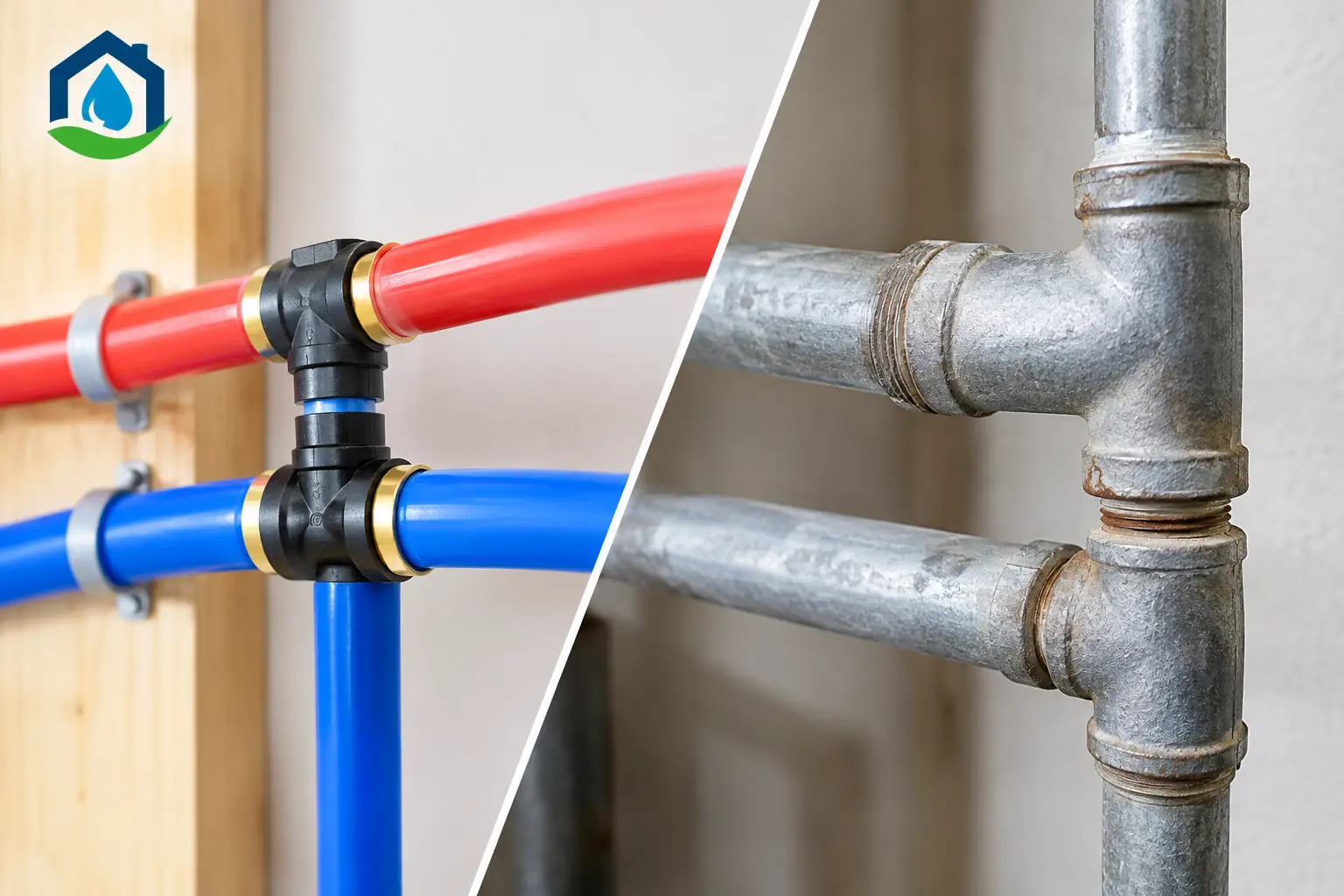
A shower that loses pressure when someone starts the dishwasher is rarely just a fixture problem. In many older Los Angeles County homes, it is a sign that galvanized supply lines are narrowing from the inside out. When comparing PEX versus galvanized plumbing, the real question is not which material is newer. It is which system can reliably support your home, your water use, and the work you plan to do next.
Galvanized piping was widely used in homes built before the 1960s, though it can appear in properties from later decades as well. PEX, or cross-linked polyethylene tubing, is now a common choice for residential repipes and remodels. Both materials have a place in the history of home plumbing, but they perform very differently over time.
PEX Versus Galvanized Plumbing at a Glance
Galvanized steel pipe is coated with zinc to slow corrosion. When it was installed, it offered a durable metal alternative to earlier plumbing materials. The issue is that the protective coating does not last forever. As the pipe ages, corrosion and mineral scale can form inside the line, reducing its effective diameter and affecting water quality and flow.
PEX is a flexible plastic piping material made for hot and cold water distribution. It does not rust, and mineral buildup is far less likely to restrict the line. Because it can bend around many framing obstacles, a skilled plumbing team can often run PEX with fewer fittings and less invasive wall access than a rigid-pipe replacement requires.
That does not mean every home needs an immediate whole-house repipe. A property with a small, isolated pipe issue may be better served by a targeted repair. But when galvanized lines are causing repeated leaks, inconsistent pressure, rusty water, or renovation delays, replacing the aging system is often the more responsible long-term investment.
Why Galvanized Plumbing Becomes a Problem
The concern with galvanized pipe is usually hidden inside the walls, beneath floors, or in a crawl space. A pipe can look acceptable from the outside while its interior has become heavily restricted. Over decades, corrosion creates rough surfaces that collect minerals and sediment from the water supply.
Homeowners may first notice weak water flow at one fixture, then throughout the house. Hot water may seem slower than cold water because scale buildup and corrosion can affect smaller hot-water lines more severely. Brown, yellow, or reddish discoloration after the water has been off for several hours can also point to deteriorating galvanized piping.
Leaks are another common concern. As metal weakens, small pinhole leaks or failures at threaded connections can develop. A visible leak may be minor, but the hidden moisture behind it can damage drywall, flooring, cabinets, and framing if it is not addressed promptly.
In Southern California, the condition of an older plumbing system can also matter during a sale, a bathroom renovation, an ADU project, or a major addition. It is frustrating to invest in new finishes only to open walls again later for failing water lines. Planning the plumbing infrastructure before construction begins can protect the larger project and avoid unnecessary rework.
Where PEX Performs Well
PEX is popular because it addresses several practical issues associated with old galvanized systems. It is corrosion-resistant, flexible, and well suited to modern residential water distribution. The flexibility can reduce the number of connections needed behind walls, which means fewer potential leak points when the system is designed and installed correctly.
PEX also tolerates movement better than rigid metal pipe. That can be helpful in wood-framed homes, where seasonal movement and normal building vibration occur. It is quieter than metal in many installations because it does not transmit water-flow noise in the same way.
For a repipe, PEX can often make installation more efficient. Access still matters, and walls or ceilings may need to be opened in selected areas, but the tubing's flexibility can help a licensed plumber route new lines with a more focused repair plan. A professional scope should explain where access is expected, how fixtures will be connected, and how wall patches are handled once plumbing work is complete.
PEX is also a practical fit for homes receiving new bathrooms, remodeled kitchens, laundry upgrades, or additions. When plumbing work is coordinated with general construction, the piping can be placed correctly before insulation, drywall, cabinetry, and finishes are installed.
The Trade-Offs Homeowners Should Understand
No plumbing material is right for every condition. PEX should be installed away from direct sunlight because ultraviolet exposure can damage it over time. It is not generally used for exposed outdoor runs, and any visible piping must be properly protected from physical damage.
The quality of the installation matters as much as the material. PEX comes in different types, and it can be connected using different fitting systems. A licensed plumbing contractor should select a system appropriate for the home's water service, local code requirements, accessible routing, and fixture demands. Poor support, improper connections, or shortcuts at transitions can create problems regardless of the pipe selected.
Galvanized pipe also has one practical advantage in limited situations: an existing section that remains sound may not need to be disturbed solely because it is old. Yet patching one area does not restore the interior condition of the remaining lines. If pressure issues and corrosion are widespread, repeated spot repairs can become more expensive and disruptive than a planned repipe.
Copper is another option some homeowners consider. It has a long track record and remains appropriate for certain applications, but it is usually more expensive to install and may require more wall access because it is rigid. The best choice depends on the home's layout, existing conditions, budget, and the scope of future improvements.
Signs It May Be Time to Plan a Repipe
A professional evaluation is worthwhile when multiple warning signs appear at once. These can include recurring leaks, visibly rusty water, low or uneven water pressure, old galvanized lines in several parts of the home, and plumbing that complicates a planned remodel.
A repipe may also make sense when an older home has had many pieced-together repairs over the years. Different pipe materials, aging shutoff valves, improvised routing, and inaccessible connections can make simple service calls harder than they should be. Replacing the system in a coordinated way gives the homeowner a clearer understanding of where the lines run and what has been updated.
Before approving work, ask for a defined scope rather than a vague promise to “replace old pipes.” The scope should identify the proposed piping material, fixture connections, shutoff valve upgrades, expected access points, permit requirements when applicable, and the plan for testing the completed system. It should also clarify what restoration is included after plumbing access is complete.
A Repipe Is About More Than Pipe
Whole-home plumbing work affects walls, floors, cabinetry, fixtures, and sometimes HVAC or electrical pathways. That is why coordination matters. A contractor with both plumbing and general construction capabilities can help organize the work so the project moves from assessment to installation, testing, and restoration with one accountable team.
At Alfa Home Services, our licensed teams approach repipes with the same care we bring to remodeling and home infrastructure projects: clear communication, respectful in-home service, and attention to the areas surrounding the repair. We Treat Your Home Like Our Own because the condition of your plumbing should not come at the cost of unnecessary disruption to your living space.
If your home still relies on galvanized water lines, do not wait for a larger leak to force the decision. A careful inspection and an honest project estimate can show whether a targeted repair is sensible now or whether a planned PEX repipe will better protect your home for the years ahead.