
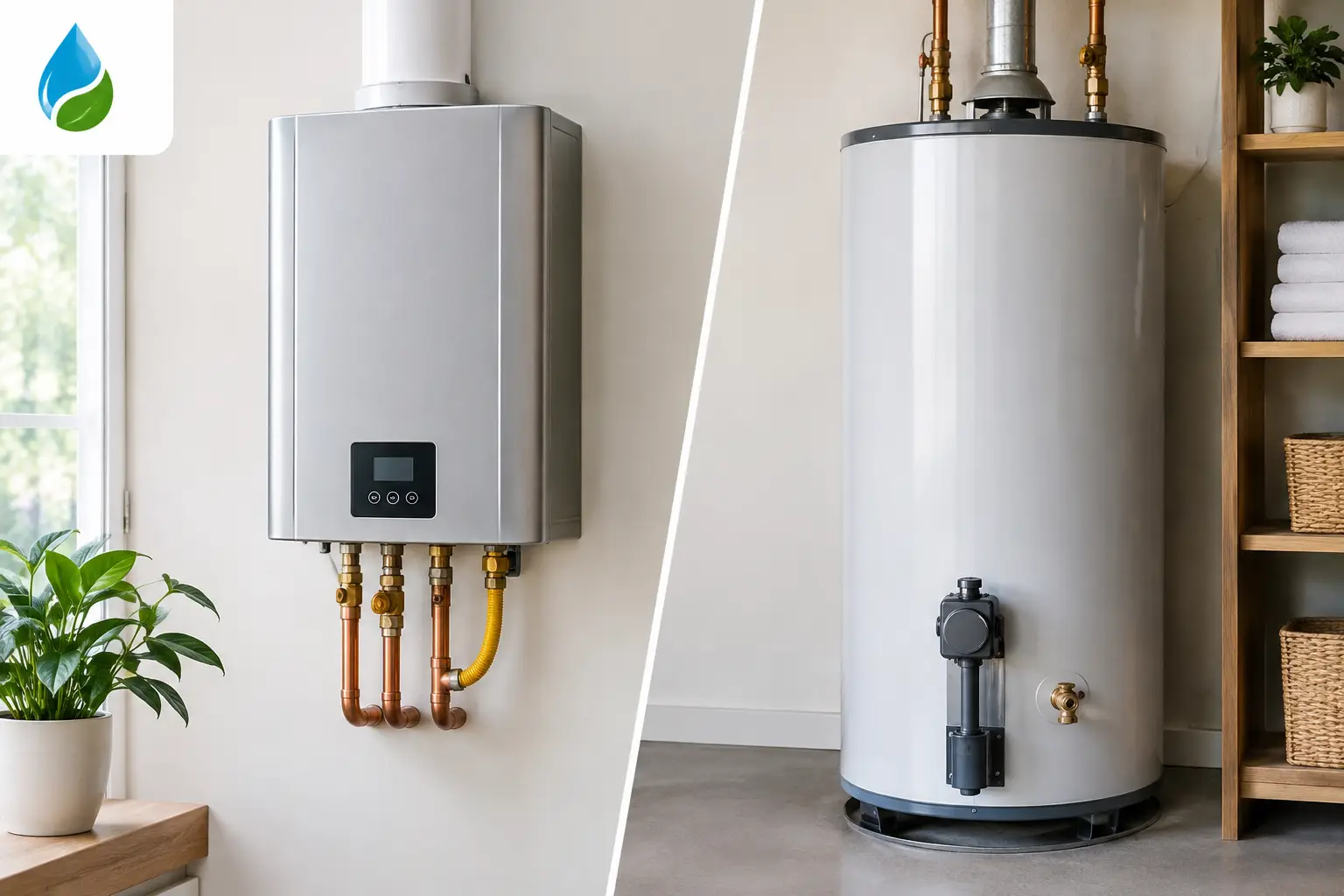
A water heater decision can feel simple until the morning everyone needs a shower, the dishwasher is running, and the laundry is underway. For Los Angeles homeowners, comparing tankless versus standard water heaters is less about choosing the newest equipment and more about matching the system to the home, household habits, utility setup, and project budget.
A conventional storage-tank water heater keeps a set amount of water hot and ready. A tankless water heater heats water as it moves through the unit. Both can provide dependable hot water when they are correctly sized, professionally installed, and maintained. The better fit depends on the details behind the wall, not just the equipment on the brochure.
Tankless Versus Standard Water Heaters: The Core Difference
A standard water heater stores hot water in a tank, commonly 40 to 75 gallons in a single-family home. The burner or electric elements heat the stored supply, then cycle on periodically to maintain temperature. Because hot water is already available, the unit can deliver a strong flow right away until the tank is depleted.
A tankless model has no storage tank. When a hot-water fixture opens, the unit detects flow and heats water on demand. It can continue supplying hot water for a long period, but only within its rated flow capacity. If a household asks it to heat more water than it can produce at once, users may notice reduced temperature or flow at one or more fixtures.
That distinction matters in active households. A large tank may handle several back-to-back showers well, but eventually needs time to recover. A properly sized tankless unit can support extended use without running out, yet it must be selected for the number of simultaneous fixtures, incoming water temperature, and desired temperature rise.
Upfront Cost and Installation Scope
In most cases, replacing an existing storage-tank heater with another comparable tank is the more economical installation. The location, water connections, gas line or electrical circuit, and venting may already be suitable, although each should still be inspected. If the existing heater is aging, corroded, improperly vented, or not up to current requirements, the project scope can increase.
Tankless installations usually cost more at the outset. Gas-fired models often require a larger gas line because they draw a high amount of fuel while operating. They may need new dedicated venting, a condensate drain for high-efficiency models, electrical work for controls, and changes to the water piping. In a garage, closet, exterior wall, attic, or a tight utility area, access and code requirements also affect labor.
For an older Los Angeles home, the water heater upgrade may reveal related infrastructure needs. Undersized gas piping, deteriorated valves, aging galvanized water lines, inadequate combustion air, and poorly planned vent routes should not be ignored simply to keep the installation price low. A clear site assessment helps prevent surprise change orders and supports a safer long-term result.
Permits are also part of doing the work correctly. Water heaters involve fuel, combustion, venting, pressure relief, seismic strapping, drainage, and electrical requirements. A licensed contractor should explain the scope, identify required corrections, and leave the work area clean and protected.
Energy Use and Monthly Operating Costs
Tankless water heaters are often chosen for energy efficiency. Since they do not keep a tank of water hot throughout the day, they avoid much of the standby heat loss associated with storage systems. For smaller households or homes with intermittent hot-water use, that difference can be meaningful over time.
Still, lower energy use does not automatically mean a tankless unit will deliver the lowest overall ownership cost. The purchase and installation cost may be substantially higher, and service needs should be factored into the decision. Energy rates, fuel type, household usage, the age of the existing equipment, and available utility incentives can all change the math.
High-efficiency tank water heaters can also be a practical option. If the household uses substantial hot water in concentrated periods, a well-sized, efficient tank may provide excellent comfort at a lower initial investment. The goal is not to chase a label. It is to evaluate both operating expense and installation scope over the expected life of the equipment.
Hot-Water Comfort for Real Households
The question homeowners ask most often is whether a tankless heater provides endless hot water. The honest answer is that it can provide continuous hot water when demand stays within the unit's capacity. That is different from unlimited capacity.
A tankless system is a strong candidate for a home where people take showers at different times, where a primary bath is far from the current heater, or where freeing up floor space has value. It can also work well for an ADU, a home addition, or a remodel where dedicated hot-water service makes sense.
A standard tank is often a sensible choice for families with predictable high-demand windows, especially when multiple showers, appliances, and fixtures run at once. A larger or higher-recovery tank may meet that demand more economically than a single tankless unit. In some larger homes, two tankless units, a tankless system with recirculation, or a hybrid design may be worth considering.
Recirculation Can Change the Experience
Neither heater type alone solves the problem of waiting for hot water at a distant bathroom or kitchen. That delay is usually caused by the length and layout of the plumbing lines. A recirculation system can reduce the wait, but it must be designed carefully because it can add energy use, equipment cost, and maintenance requirements.
For a bathroom remodel or major renovation, it is often the right time to look at pipe routing, fixture locations, and recirculation together. Coordinating plumbing work with construction planning can improve comfort without creating unnecessary complexity later.
Space, Lifespan, and Maintenance
Tankless units are compact and may be wall-mounted indoors or outdoors when the model and installation conditions allow. This can recover valuable floor area in a laundry room, utility closet, garage, or ADU. In a tight home, that space benefit can be a deciding factor.
Storage-tank heaters require more room, and a tank leak can cause significant property damage if it goes unnoticed. A drain pan, proper discharge piping, accessible shutoff valves, and routine inspections are worthwhile safeguards. Homeowners should also watch for rust-colored water, moisture around the base, inconsistent temperature, popping sounds, and a heater nearing the end of its expected service life.
Both types need maintenance. Tank heaters benefit from periodic flushing to reduce sediment buildup. Tankless units commonly require flushing or descaling, particularly where mineral content contributes to scale. Filters, venting, condensate components, and ignition systems should also be checked according to the manufacturer's guidance.
A tankless unit may have a longer potential service life than a conventional tank, but that advantage depends on proper installation and regular service. Neglected maintenance can reduce efficiency, cause error codes, and shorten component life. A lower-maintenance system is not the same thing as a no-maintenance system.
Choosing the Right Water Heater for Your Home
The best choice begins with an accurate assessment rather than a guess based on the number of bathrooms. A qualified plumber should consider the household's peak hot-water demand, existing fuel and electrical capacity, fixture count, pipe condition, installation location, venting route, drainage, and budget. Future plans matter, too. A coming addition, ADU, kitchen renovation, or growing family may justify sizing beyond today's minimum need.
Choose a standard tank when you want a straightforward replacement, reliable stored capacity, and lower upfront cost. Choose tankless when continuous hot water, space savings, and potential efficiency gains justify the more involved installation. Either option can be the right investment when the system is sized honestly and installed to current code.
For homeowners who want a clear answer before committing, Alfa Home Services can evaluate the existing setup, explain the trade-offs in plain language, and provide a defined scope for the work. The right water heater should fit the way your household lives, protect the home, and provide dependable comfort long after installation day.